Serving Cypress, TX and Surrounding Areas


Salt Water Pool System Installation in Houston, TX
Tired of hauling chlorine jugs every week? Tired of red eyes and that strong pool smell? A salt water system makes chlorine for you, right at the equipment pad. We size it to your pool and set it up for Houston's hard water, so it keeps working.
Call (832) 524-1129 Ask About Converting to Salt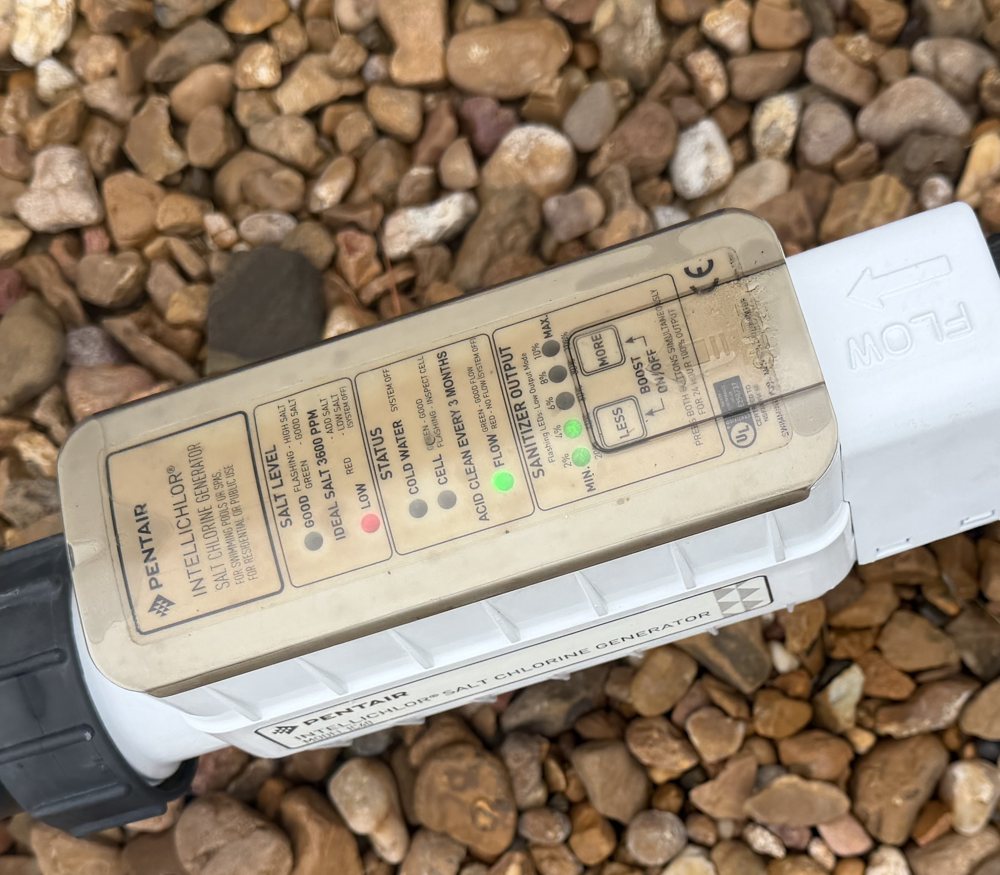
Why Owners Switch to Salt
- No more chlorine runs: The system makes chlorine from salt, day after day.
- Steadier water: Chlorine is made a little at a time, not dumped in once a week.
- Softer feel: Many swimmers say the water feels gentler on skin and eyes.
- Less to store: Bags of pool salt replace most of the jugs in your garage.
What Houston Pools Need to Plan For
- Hard water: Calcium can scale the cell plates. Regular checks prevent it.
- A long swim season: More running hours means more chlorine demand.
- Summer sun: Stabilizer has to be right, or chlorine burns off fast.
- The odd hard freeze: Cells slow down in cold water, so plan a backup.
What is a salt water pool system?
A salt water pool system is a chlorine generator. It has two parts:
- A salt cell. It is plumbed into the line that returns water to your pool.
- A control box. It powers the cell and sets how much chlorine it makes.
You dissolve a small amount of pool salt in the water. As water passes through the cell, electrolysis turns some of that salt into chlorine. The chlorine cleans the pool, then breaks back down into salt, and the cycle repeats.
So a salt pool is still a chlorine pool. The difference is that you stop adding chlorine by hand.
Ready to talk about your pool? Call (832) 524-1129 or send us a message.
A Salt Pool Is Far Less Salty Than the Ocean
People hear "salt water" and picture the beach. That is not what you swim in.
Hayward lists 2,700 to 3,400 parts per million as the ideal salt range for its Aqua Rite system. It names 3,200 as the best target. NOAA puts the ocean at about 35 parts per thousand. That works out to 35,000 parts per million.
So a salt pool holds about a tenth of the salt in sea water. Most people can barely taste it. You can read how ocean salinity is measured on the NOAA Ocean Service site.
That low level is also why the salt lasts. The cell turns salt into chlorine, and the chlorine turns back into salt. You mostly add salt to replace what leaves with splash out, backwashing, and heavy rain.
Salt Is Not the Right Call for Every Pool
Some pools are better left on chlorine. The honest answer costs less than finding out later.
What your pool is built from matters most. Salt water is mildly corrosive over long exposure. Natural stone coping needs a look. So do metal components and older equipment. Some of it was never made for salt. A pool with soft stone or aging metal fittings can wear faster than it would on chlorine.
There is a cost question too. A conversion has an upfront cost for the equipment and the install. The cell is a wear part, so it gets replaced eventually. Swim a few weekends a year and the math may not work for you. Swim all season and it usually does.
Every pool gets looked at before a conversion is recommended
"Salt may not be the best choice if your pool has stone, metal components, or equipment that isn't compatible with saltwater. It also comes with an upfront installation cost and eventual cell replacement. We'll evaluate your pool before recommending a conversion."
Boardwalk Pools
One more thing to know. A salt pool is not a chemical free pool. The system makes its own chlorine instead of you buying it. The water still needs testing and balancing on the same schedule.
Houston's Hard Water Is the Biggest Thing to Plan For
Every salt system has one weak spot. It is the metal plates inside the cell.
Calcium in the water can build up on those plates as white scale. Scale blocks the surface that makes chlorine. The cell works harder and makes less. Hayward's own manual says buildup on the cell points to high calcium in the pool.
Houston water starts out hard. Houston Public Works reports total hardness of 136 to 229 parts per million on its main system. Every time you top off the pool with a hose, more calcium goes in. In our long, hot summers, a lot of water evaporates and leaves that calcium behind.
None of that is a reason to skip salt. It is a reason to set the system up right and check it on a schedule. Hayward recommends opening and looking at the cell every three months, or after you clean the filter.
Do Not Scrape a Scaled Salt Cell
Scraping or poking at the plates can damage their coating. That coating is what makes the cell work. If you see white crust inside the cell, have it cleaned the right way. We clean salt cells as part of our pool cleaning and maintenance services.
How We Install a Salt Water System on Your Pool
Converting an existing pool does not mean draining it or tearing anything out. Here is how the job runs.
- We look at your equipment pad. We check the pump, filter, heater, and plumbing. The salt cell needs good flow, so a tired pump or clogged filter gets flagged first.
- We size the system to your pool. Cells are rated by pool volume. A cell that is too small has to run flat out all season. That shortens its life.
- We plumb in the cell and mount the control box. The cell goes in the return line, after the filter. The control box is wired to power and to the pump.
- We add salt and balance the water. Salt is added to the target level and given time to dissolve. Then we set pH, alkalinity, calcium, and stabilizer.
- We set the output and show you the controls. You will know what the lights mean and what to do if a warning comes on.
If your pump, filter, or heater needs work, it makes sense to handle it at the same visit. Our pool repairs and equipment installations team works on the whole pad.
How Long a Conversion Takes
A straightforward conversion is usually one visit. Often a few hours. The system goes on the equipment pad, the salt goes in the pool, and the work is done that day.
The wait is chemistry, not labor. Salt has to dissolve and circulate before the system is switched on. We follow the manufacturer's instructions on timing. Turning it on early gives you a false reading. We check plumbing, electrical, and your current water chemistry first, then confirm the timing from what we find.
Cell Sizing Is Where Houston Installs Go Wrong
We install Jandy, Pentair, and Hayward systems. The right one depends on your pool and on what is already on the equipment pad. A system that works with the automation you own beats a brand name.
Sizing is the real decision. Every cell has a maximum gallon rating. The tempting move is to match that rating to your pool. In Houston that is how you end up with a system running flat out by July.
Four things drive how much chlorine a pool needs. Total volume. How much direct sun the water takes. How heavily the pool gets used. How many hours the pump runs. A pool in full afternoon sun, with kids in it daily, needs more than its gallon count suggests.
Size above the pool, not to it
"We consider pool volume, sun exposure, swimming activity, and pump run time. With our long, hot Houston summers, we recommend enough chlorine-producing capacity to comfortably meet demand rather than choosing a cell right at its maximum gallon rating."
Boardwalk Pools
The payoff is not just better water. A cell with room to spare runs below its limit instead of at it. That is easier on the cell. It tends to show up as a longer service life.
A Salt System Makes Chlorine but It Does Not Balance Your Water
This is the part most owners are not told. A salt pool is lower effort, not zero effort.
The system handles chlorine. You still need the rest of the water in range. That means pH, alkalinity, calcium hardness, stabilizer, and the salt level itself.
Stabilizer Matters More in the Texas Sun
Sunlight breaks down chlorine fast. Stabilizer, also called cyanuric acid, shields it. Hayward's Aqua Rite chart lists 60 to 80 parts per million of stabilizer for its salt pools. Too little, and the sun burns off what the cell makes. Too much, and the chlorine works more slowly.
pH Tends to Drift Up
Salt pools often see pH creep higher over time. High pH makes chlorine less effective. It also makes calcium scale more likely, which brings us back to the cell. Steady pH is the best protection for the cell you just bought.
| Traditional chlorine pool | Salt water pool | |
|---|---|---|
| Where chlorine comes from | Tablets, liquid, or granules you add by hand. | Made in the salt cell from dissolved pool salt. |
| How steady it is | Peaks after each dose, then drops. | Made a little at a time while the pump runs. |
| What you store | Chlorine jugs or buckets of tablets. | Bags of pool salt. |
| What still needs testing | Chlorine, pH, alkalinity, calcium, stabilizer. | The same list, plus the salt level. |
| Extra upkeep | None beyond dosing. | Periodic salt cell checks and cleaning. |
What Happens to a Salt System in a Houston Cold Snap
Salt cells do not like cold water. Hayward's Aqua Rite stops making chlorine when the water drops below 50 degrees.
Most Houston winters never get the water that cold for long. Hard freezes do happen, though. February 2021 was a reminder. When one comes, the cell may pause for a few days.
The fix is simple. Keep the pump running to protect the plumbing, and add chlorine by hand until the water warms up. The system picks back up on its own.
Already Have a Salt System That Is Acting Up?
This page is about adding salt to your pool. Is your salt system flashing a warning, low on output, or not turning on? That is a repair call.
We troubleshoot and repair existing salt systems, clean scaled cells, and diagnose control boards. Start with our pool repair services. Low flow can also shut a cell down, so a weak pump is worth ruling out. Our pool pump repair page covers that.
What a Cell Costs You in Time
A salt cell is a wear part, not a permanent fixture. Plan on about three to five years before replacement. The model, the hours it runs, and the care it gets can push that either way. Treat it as a planned expense, not a surprise.
Calcium buildup on the cell plates is the most common problem we see here. It is also the one most within your control. Scale coats the plates and chlorine production drops. Owners often read that as a dying cell when it is a dirty one. Wrong salt levels, unbalanced water, and low flow cause the same drop.
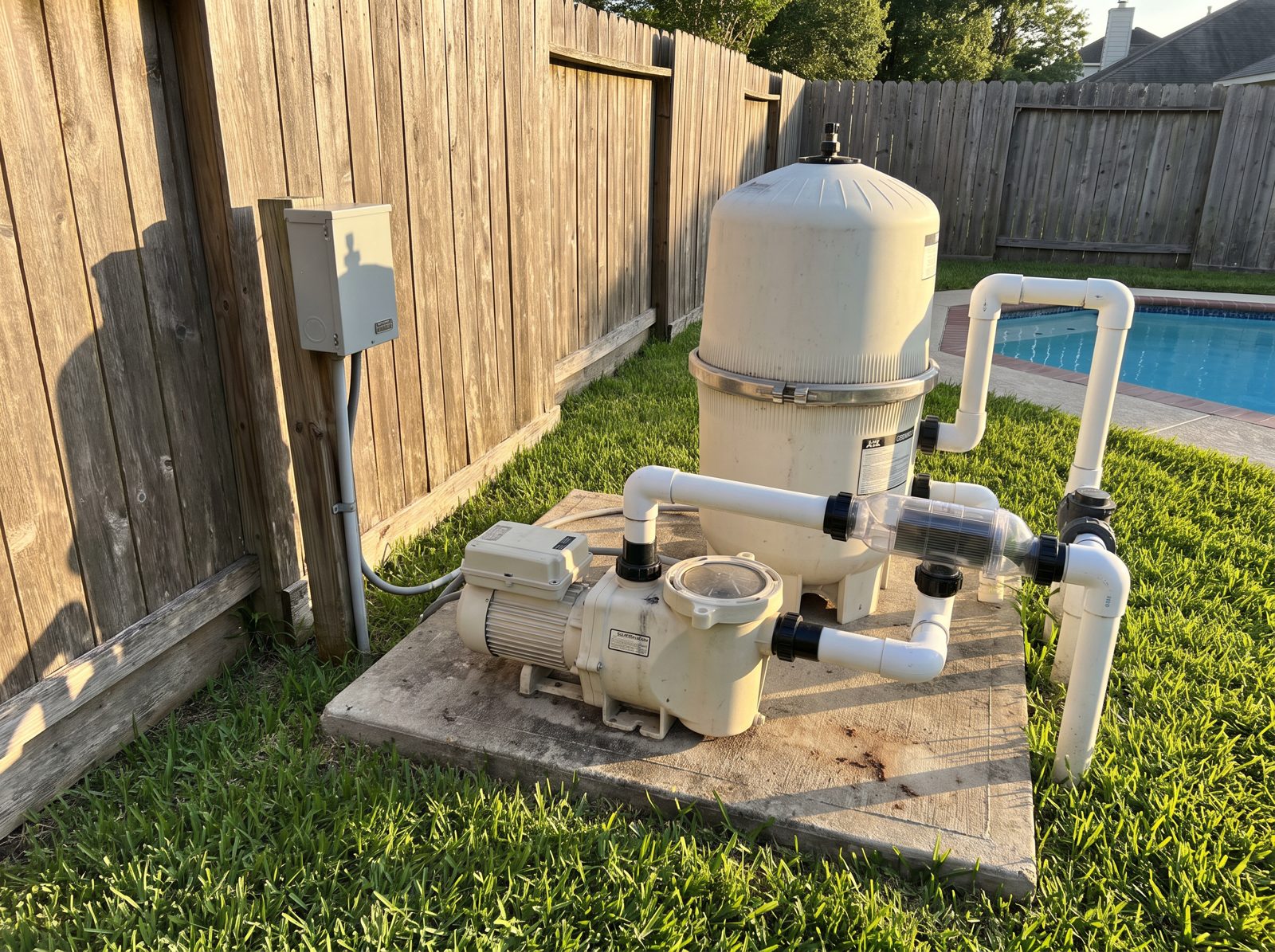
Quarterly cell cleanings are part of the service
"A common issue is calcium buildup on the cell, which can reduce chlorine production. We recommend and perform quarterly salt cell cleanings to reduce build up in the cell."
Boardwalk Pools
About Boardwalk Pools
- Family owned, with over 20 years of pool experience in the Houston area.
- Voted 2026 Best of Cy-Fair Pool Builder in Living Magazine's Readers' Choice Awards.
- Featured in the April 2025 issue of Pool Nation Magazine.
- We install, service, and repair salt systems, so one team handles it for the life of the pool.
Salt Water Pool Systems Across Northwest Houston
We come to you. Same crew, same standards, across every community we serve.
Salt Water Pool System FAQ
Ready to Stop Buying Chlorine?
Ask us whether your pool is a good fit for salt. We will look at your equipment and tell you straight.
Call (832) 524-1129"Serving Houston with over 20 years of custom pool experience."
Get in Touch
Ready to experience the Boardwalk Pools difference? Contact us today for a free quote or to schedule service.
Business Hours
Mon - Fri: 7am to 5pm
Sat Closed
Sun Closed