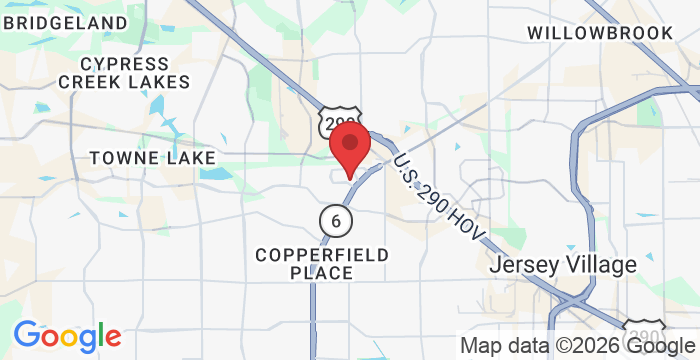
Serving Cypress, TX and Surrounding Areas


Pool Pump Repair in Houston, TX
Your pump hums but will not spin. Or it screams. Or the water in the skimmer has stopped moving and the pool is turning green. A pool pump rarely dies without warning, and most of the warnings are cheap to fix. We diagnose the whole equipment pad before we recommend replacing anything.
Call (832) 524-1129 Request a Diagnosis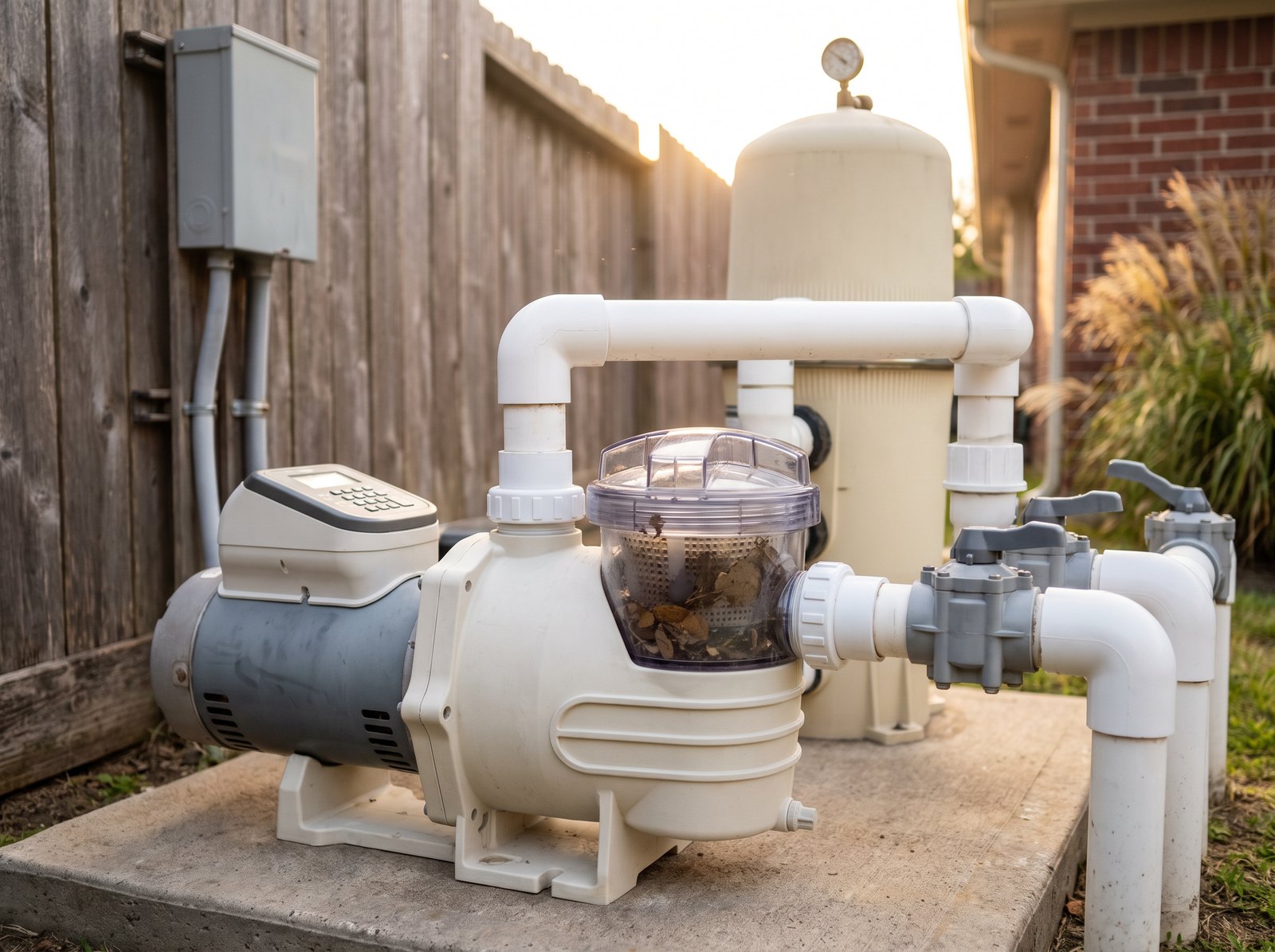
Signs Your Pool Pump Is Failing
- Water dripping under the motor: The shaft seal has failed. This is the failure we see most often in Houston.
- Hums but will not start: Usually a failed capacitor or a seized motor shaft.
- Loud grinding or screeching: The motor bearings are worn out.
- Loses prime or sucks air: A cracked lid, bad O ring, or a leak on the suction side.
Why Pumps Fail Faster in Houston
- Long run seasons: Pools here run most of the year, so motors log far more hours.
- Summer heat: The July normal high at Houston Intercontinental is 94.5 degrees.
- Hard water: Scale narrows plumbing and makes the pump work harder for the same flow.
- Storm outages: Power loss and restoration surges are hard on motors and control boards.
Why is my pool pump not working?
Almost every pool pump failure comes down to one of four things:
- A failed start capacitor. The motor hums, gets hot, and never spins up. This is a small part and a common, affordable repair.
- Worn motor bearings. The pump gets loud first, then louder, then seizes. Noise is the warning you get.
- A blocked or air locked suction side. A packed basket, a closed valve, or a leaking lid stops the pump from moving water.
- A failed shaft seal. Water leaks between the wet end and the motor. Left alone, it ruins the motor.
The order matters. A humming pump is often a ten dollar part. A screaming pump is a motor decision. Water under the motor is urgent, because every day it runs that way shortens the motor's life. Have the pad checked before you agree to a full pump replacement.
Across Houston pools, the shaft seal is the one that starts most of these calls. It leaks quietly, water reaches the motor, and heat finishes the windings somewhere in the four to seven year range. Caught at the drip, it is a seal. Caught later, it is a motor.
A Houston Pool Pump Works Far More Hours Than One Up North
Pool pumps are rated in running hours, not calendar years. That is why the same pump lasts different amounts of time in different cities.
Houston pools are not closed for winter. Most run some form of circulation nearly year round, and they run long hours all summer. The National Weather Service lists a normal July high of 94.5 degrees at Houston Intercontinental. Warm water grows algae fast, so owners here run longer filter cycles to keep up.
The result is simple. A pump in a climate with a short swim season can sit idle for months. A Houston pump does not get that break. Bearings and seals wear on hours, so they reach the end sooner here. This is normal, not a sign that anything was installed wrong.
Water chemistry adds to it. Houston Public Works reports total hardness between 136 and 229 parts per million on its main system. Hard water leaves scale inside pipes, filters, and heaters. Scale narrows the path the water has to travel, so the pump strains against more resistance every season. Keeping up with weekly pool cleaning and chemistry is one of the most effective ways to protect the pump.
Turn Off a Pump That Is Humming or Leaking
A humming motor draws current and builds heat. Without spinning, it gets no cooling airflow. Leaving it on can burn out a motor that a small capacitor would have saved. The same is true of water dripping from the shaft seal onto the motor. Switch the pump off at the breaker and get it looked at before you run it again.
Five Reasons a Pool Pump Stops Moving Water
The failure we see most in Houston is the shaft seal
"Most common failure is seal leaks that allow water into the motor. Then heat, and over four to seven years the motor windings go bad."
— Dan Marcotte, Boardwalk Pools
1. The Start Capacitor Has Failed
The capacitor gives the motor the jolt it needs to begin turning. When it fails, the motor hums but the shaft never spins. The pump gets hot to the touch and may trip the breaker.
This is the best outcome on the list. The part is inexpensive and the repair is quick. Running the pump in this state anyway is what turns a small fix into a new motor.
2. The Motor Bearings Are Worn
Bearings are what let the shaft spin freely. As they wear, the pump gets loud. Owners describe it as grinding, screeching, or a rumble you can hear from inside the house.
Noise is a countdown, not a nuisance. A pump that is getting louder each week is heading for a seizure. Caught early, the motor can often be replaced on its own while the wet end stays.
3. The Shaft Seal Is Leaking
The shaft seal keeps pool water inside the wet end and away from the motor. When it fails, water drips onto the motor housing and works its way into the windings.
A seal is a modest repair. A motor ruined by a seal that went unattended is not. This is the failure most worth catching fast.
The damage is gradual, which is why it gets missed. Water wicks past the seal, sits against the motor, and the heat of a long Houston run season cooks the windings from the inside. That process usually plays out over four to seven years. Nothing sounds wrong until the day the motor will not start. The drip on the concrete is the only warning, and it shows up years before the failure does.
4. The Suction Side Is Blocked or Pulling Air
The pump cannot get water if the basket is packed. The same happens when a valve is partly closed or the lid O ring has gone hard. You will see air in the pump pot, a low or bouncing filter pressure, and little movement at the returns.
None of that is a motor problem. It is also why we check the pad first. On many calls the pump is fine and the fault is a basket, a valve, or a leak upstream. If air keeps returning after those are ruled out, the next step is leak detection on the suction line.
5. Electrical Faults at the Pad
Outdoor equipment pads live through heat, humidity, and storms. Over time that produces corroded terminals, failed timers, tripped GFCI breakers, and damaged control boards on variable speed pumps.
Houston gets long power outages after major storms. Losing power is not usually what hurts a motor. The surge when service is restored, and running a pump dry afterward, do more damage.
So many of these faults sit upstream of the motor. We treat a dead pump as an equipment pad diagnosis, not a pump diagnosis. That is how we handle all our pool repairs and equipment installations. It is also why a fair number of these calls end without a replacement.
Repair or Replace? The Federal Motor Rules Changed the Answer
For years the advice was simple. If the motor failed, you swapped in another motor like the one that came out. That option has narrowed.
The U.S. Department of Energy set efficiency standards for dedicated purpose pool pump motors. Motors rated at 0.5 total horsepower and above must have variable speed control and freeze protection. The rules apply to standard size motors from September 29, 2025. They apply to small motors from September 28, 2027. Motors under 0.5 total horsepower have an efficiency requirement instead.
In plain terms, most single speed replacements in the common size range are being phased out. Say your single speed pump fails today. A like for like swap is no longer the default path.
You Do Not Always Have to Replace the Whole Pump
This is the part most owners are never told. Aftermarket variable speed motors are available that mount to an existing single speed pump. If the wet end, the housing, and the plumbing are all sound, the motor is what gets changed, not the entire assembly. You end up compliant, quieter, and cheaper to run, without paying for a full pump you did not need.
Whether that is the right call depends on the condition of the wet end and how the pump was plumbed. It is a decision made at the pad, with the equipment in front of us, not over the phone.
Our Rule on Repair Versus Replace
Age is the first filter. A pump in the three to five year range, or an older one that is clearly in good shape, gets repaired. Past that, the arithmetic shifts. On an older pump, the part that failed is rarely the only part near the end of its life, and the second and third repair inside a year can total more than the replacement would have cost in the first place.
When a pump is still worth fixing
"If the pump is three to five years old or in good shape, I will repair it. The older the pump, the more possibility of other parts that will need to be replaced, costing sometimes more than the replacement. There are aftermarket variable speed motors that can replace the single speed motor. You don't always have to replace the whole pump."
— Dan Marcotte, Boardwalk Pools
That is not only a cost. ENERGY STAR reports that certified in ground pool pumps use about 20 percent less energy than standard pumps. They save roughly 50 dollars a year, up to 290 dollars over their life. They pay for themselves in under two years. ENERGY STAR also notes a pool pump can cost as much as 310 dollars a year to run. Variable speed pumps let you run long, slow, quiet cycles instead of short, loud, full power ones.
| Repair the existing pump | Retrofit a variable speed motor | Replace the whole pump | |
|---|---|---|---|
| Usually right when | The pump is roughly three to five years old or in good shape, and the fault is a capacitor, seal, lid, basket, valve, or wiring. | The motor is finished but the wet end, housing, and plumbing are all sound. | The pump is old, the wet end is worn too, and other parts are close behind the one that failed. |
| Cost shape | A component level repair, a fraction of a new pump. | Between the two. You pay for a motor, not an assembly. | Highest up front, lower to run every month afterward. |
| Energy use | Unchanged. | Lower. Same savings as a new variable speed pump. | Lower. Long low speed cycles use far less power than full speed ones. |
| Noise | Unchanged. | Much quieter at low speed. | Much quieter at low speed, which matters on small Houston lots. |
Want to check the rules and the numbers yourself first? See the ENERGY STAR pool pump guidance from the U.S. Environmental Protection Agency. It is worth reading before you talk to any contractor, including us.
One more thing worth knowing. A pump that is oversized for the pool wastes money in both directions. It costs more to run and it pushes water through the filter faster than the filter can clean it. Sizing to the pool, not to whatever was there before, is part of the job.
What Happens When You Call Boardwalk Pools
No guessing, and no pressure to decide at the pad. Here is how a pump call runs.
- Tell us what it is doing, and send a photo. Call (832) 524-1129 or use the form. Humming, screeching, tripping the breaker, losing prime, and leaking are different problems. A photo of the pump and its label matters just as much. There are dozens of pump models in the field, and seeing yours before the truck leaves is how the right part comes with it instead of arriving on a second trip.
- We diagnose the whole pad. Basket, lid and O ring, valve positions, filter pressure, and suction line come first. Then the electrical side: breaker, timer, wiring, capacitor, and on a variable speed pump the drive and control board. Then the motor and wet end themselves.
- You get the finding and the options. We tell you what failed and why. If it is a repair, you hear the repair. If the motor is gone, you hear what replacement involves, including what the current federal motor rules allow.
- We fix it and verify flow. After you approve, we complete the work and confirm the pump primes, holds prime, and runs at correct pressure before we leave.
About Boardwalk Pools
- Family owned, with over 20 years of pool experience in the Houston area.
- Voted 2026 Best of Cy-Fair Pool Builder in Living Magazine's Readers' Choice Awards.
- Featured in the April 2025 issue of Pool Nation Magazine.
- We service the whole equipment pad, so a pump call can also settle a heater or filter question.
Parts, Brands, and How Long a Pump Repair Takes
Honest expectations are worth more than a fast promise. Here is how pump repairs actually run.
Turnaround Is Usually Two to Four Days
Most pump repairs are completed within two to four days once the part is confirmed available. The gap is sourcing, not scheduling. That is also why the photo matters so much at the first call. Identifying the pump up front removes the trip that would otherwise be spent just finding out which part it needs.
A pool does not turn green in two days if you keep the water moving in the meantime, and we will tell you what to do while you wait.
Which Pumps We Service
The major American brands are all serviceable, and parts for them are readily available through the supply chain we buy from. The newer overseas brands that have appeared in the market are a different story. Parts for many of them simply cannot be sourced here, which means a failure on one of those pumps is usually a replacement rather than a repair. That is not a preference on our part. It is what the parts availability allows.
If you are choosing a new pump, that is worth weighing before price alone decides it. A cheaper pump that no one can get parts for is a pump with one life in it.
What We Carry on the Truck
Common wear items ride with us. The full range of pump specific parts does not, because no truck holds parts for every pump model in Houston. Sending a photo of the equipment pad is what closes that gap and turns a diagnosis visit into a repair visit.
Four Habits That Make a Houston Pool Pump Last Longer
Most pump failures are wear, and wear can be slowed.
- Empty the pump and skimmer baskets weekly. A packed basket starves the pump and makes it run hot.
- Keep the lid O ring lubricated. A dry, flattened O ring lets air in, and air makes the pump run without water to cool it.
- Hold your chemistry steady. Scale from hard water narrows plumbing and raises the load on the motor every year.
- Listen, and look underneath. A pump that is getting louder is telling you the bearings are going. A wet patch under the motor is telling you the shaft seal has gone, which is the failure that ends the most motors here. Calling at either sign is far cheaper than calling after the motor is finished.
If your heater has also been slow or unreliable, the two are often connected. Low flow from a tired pump will lock out a healthy heater. Our pool heater repair page covers that.
Pool Pump Repair Across Northwest Houston
We come to you. Same crew, same standards, across every community we serve.
Pool Pump Repair FAQ
Pump Down and the Pool Going Green?
Get it diagnosed before a small part turns into a new pump. Many pump calls are cheaper than owners expect.
Call (832) 524-1129"Serving Houston with over 20 years of custom pool experience."
Get in Touch
Ready to experience the Boardwalk Pools difference? Contact us today for a free quote or to schedule service.
Business Hours
Mon - Fri: 7am to 5pm
Sat Closed
Sun Closed